
What Is a Strong Password in 2026? Best Practices Beyond Length and Complexity
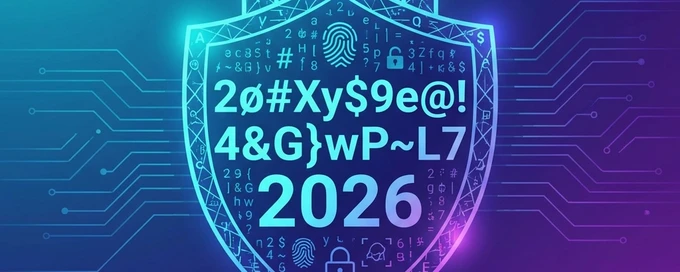
In the rapidly evolving landscape of 2026, digital security has become more critical—and more challenging—than ever before. With the rise of quantum computing concepts and AI-driven cracking tools, the traditional advice of "use 8 characters and a number" is dangerously obsolete. A strong password today isn't just a lock; it's a fortress.
The New Standard for Password Strength
Gone are the days when P@ssw0rd123 could pass as secure. In 2026, strength is measured by entropy—a measure of unpredictability. A truly strong password must withstand:
- Brute-force attacks: Automated attempts to guess every possible combination.
- Dictionary attacks: Using lists of common words and phrases.
- AI Pattern Recognition: Algorithms that predict human behavior in password creation (like capitalizing the first letter or ending with a year).
Beyond Length: Why Complexity Matters
While length is mathematically the most significant factor, complexity acts as a force multiplier. A 20-character password made of only lowercase letters is easier to crack than a 15-character password combining uppercase, lowercase, numbers, and symbols.
Key Components of a 2026-Ready Password:
- Length: Minimum 16 characters. Ideally 20+.
- Variety: A mix of A-Z, a-z, 0-9, and special symbols (!@#$%^&*).
- Randomness: No recognizable words, dates, or keyboard patterns (like
qwerty).
Tools to Generate Unbreakable Passwords
Human brains are terrible at randomness. We inevitably fall into patterns. The safest way to create a password is to not "create" it at all, but to generate it.
1. Random Password Generator
For your everyday accounts, email, and banking, you need a high-entropy string that is impossible to guess. Our Random Password Generator creates balanced, complex passwords instantly. It ensures a perfect mix of character types, defeating pattern-recognition algorithms.
2. Secure & Strong Secret Key Generator
Developers and system administrators need more than just passwords; they need cryptographic secrets. For API keys, encryption salts, or internal auth tokens, use the Secure & Strong Secret Key Generator. It produces long, high-density strings suitable for machine-to-machine security.
3. Random String Generator
Sometimes you just need a unique identifier or a temporary token. The Random String Generator offers flexibility for various non-critical but unique string generation needs.
Best Practices for 2026 and Beyond
- Use a Password Manager: Never rely on your memory. Generate unique, 20+ character passwords for every site and store them in an encrypted vault.
- Enable 2FA/MFA: A password is a single point of failure. Always enable Two-Factor Authentication, preferably using an authenticator app or hardware key (Passkey).
- Rotate Vulnerable Credentials: If a service you use is breached, change that password immediately.
- Avoid PII: Never include personal information like dog names, birthdays, or anniversaries in your passwords.
Conclusion
As we navigate 2026, treating passwords as an afterthought is a risk no one can afford. By leveraging strong generation tools and adhering to modern complexity standards, you seal the cracks in your digital defense. Don't leave your security to chance/guesswork—generate it.